

Gift-Cards

A smart telescope is an all-in-one device that combines optics, an imaging sensor, and an onboard computer.
It allows you to say goodbye to complex alignments and dramatically reduces the learning curve traditionally associated with astronomy equipment. Simply place it outside, power it on, and control your observing session directly from your smartphone or tablet.
This technology has become incredibly popular because it makes astronomy accessible to everyone. Thanks to live image stacking, these telescopes can cut through urban light pollution, allowing anyone to observe nebulae, galaxies, and planets in full color within just a few minutes.

Your decision should be based on the following criteria:
Here’s an overview of some of the most talked-about smart telescopes available in 2026.
The Seestar S30 lineup has generated tremendous excitement within the amateur astronomy community. These all-in-one telescopes deliver a fully automated and user-friendly experience right out of the box.
The popularity of the Seestar S30 and S30 Pro is absolutely justified. Their consumer-friendly technology has completely disrupted the market by making automated astrophotography dramatically more affordable.
ZWO truly opened the doors of astrophotography to the general public. Before the Seestar series existed, obtaining a clean and colorful image of the Orion Nebula required a heavy motorized mount, a telescope, a dedicated astronomy camera, a laptop, and hours of frustrating calibration.
Today, a beginner can place a Seestar on a picnic table, tap their smartphone screen, and watch a galaxy appear in color within minutes, and at a fraction of the traditional cost.

Dwarf smart telescopes offer an ultra-compact design at a wallet-friendly price. They function as pocket observatories at night and intelligent wildlife cameras during the day.
Dwarf telescopes are true hybrid devices: nighttime pocket observatories that transform into intelligent telephoto cameras for wildlife and landscape photography during the day. They are perfect for users seeking a 24/7 multifunctional device at an affordable price.

Vespera telescopes are known for their futuristic design and high-quality optics. Their automatic CovalENS mosaic mode is especially popular among enthusiasts. The Vespera III and Vespera Pro II (often simply called the Vespera Pro) are only two examples from the lineup, but they represent the overall philosophy of the brand very well.
All Vespera telescopes are fully automated observatories requiring no eyepieces. Features include motorized focusing, precise tracking, live stacking, and an acclaimed automatic mosaic function.
The minimalist design combined with advanced automation means you simply place the telescope down, press a button, and the universe opens before your eyes.
The main differences between these two models lie in sensor sensitivity, battery life, and overall system configuration. The Vespera Pro II features a larger sensor for capturing expansive sky regions in a single frame, making it especially appealing to astrophotography enthusiasts.
The Vespera III represents the pinnacle of the brand. Thanks to its redesigned Petzval optics and long-lasting battery, it is an outstanding choice for demanding stargazers.

The Odyssey series offers incredible versatility combined with Nikon technology.
Odyssey telescopes are true disruptors. While most recent smart telescopes rely on refractor optics (lenses), Unistellar chose reflector optics (mirrors).
One of the biggest frustrations with compact automated telescopes was their inability to provide satisfying planetary detail. Unistellar’s technological innovation solved this problem by allowing users to instantly switch from observing distant nebulae to viewing planetary details using the same instrument.
These are among the best hybrid telescopes available today.
These are the larger siblings of Unistellar’s Odyssey family. Their large apertures allow them to collect an enormous amount of light.
The golden rule of astronomy states that the larger the mirror, the more light you collect—and the farther back into the universe you can see. Thanks to their 114 mm (4.5-inch) mirrors, significantly larger than those found in ultra-portable models, the eQuinox 2 and eVscope 2 are true “light funnels.”
Their large apertures reveal more detail in distant galaxy spiral arms and resolve individual stars inside dense globular clusters.
One of the standout features of Unistellar’s Series 2 is the advanced Deep Dark algorithm, which analyzes images in real time and separates celestial signal from urban light pollution.
Your observing style will help determine the better option.
Without an eyepiece, the eQuinox 2 directs all its power to your mobile devices. It’s the perfect instrument for hosting an astronomy evening on the patio: set it up in your yard, stay warm by the fire, and explore the night sky with your guests using a tablet.
The eVscope 2 is for those unwilling to compromise. It features a higher-resolution sensor and a Nikon-developed electronic eyepiece.
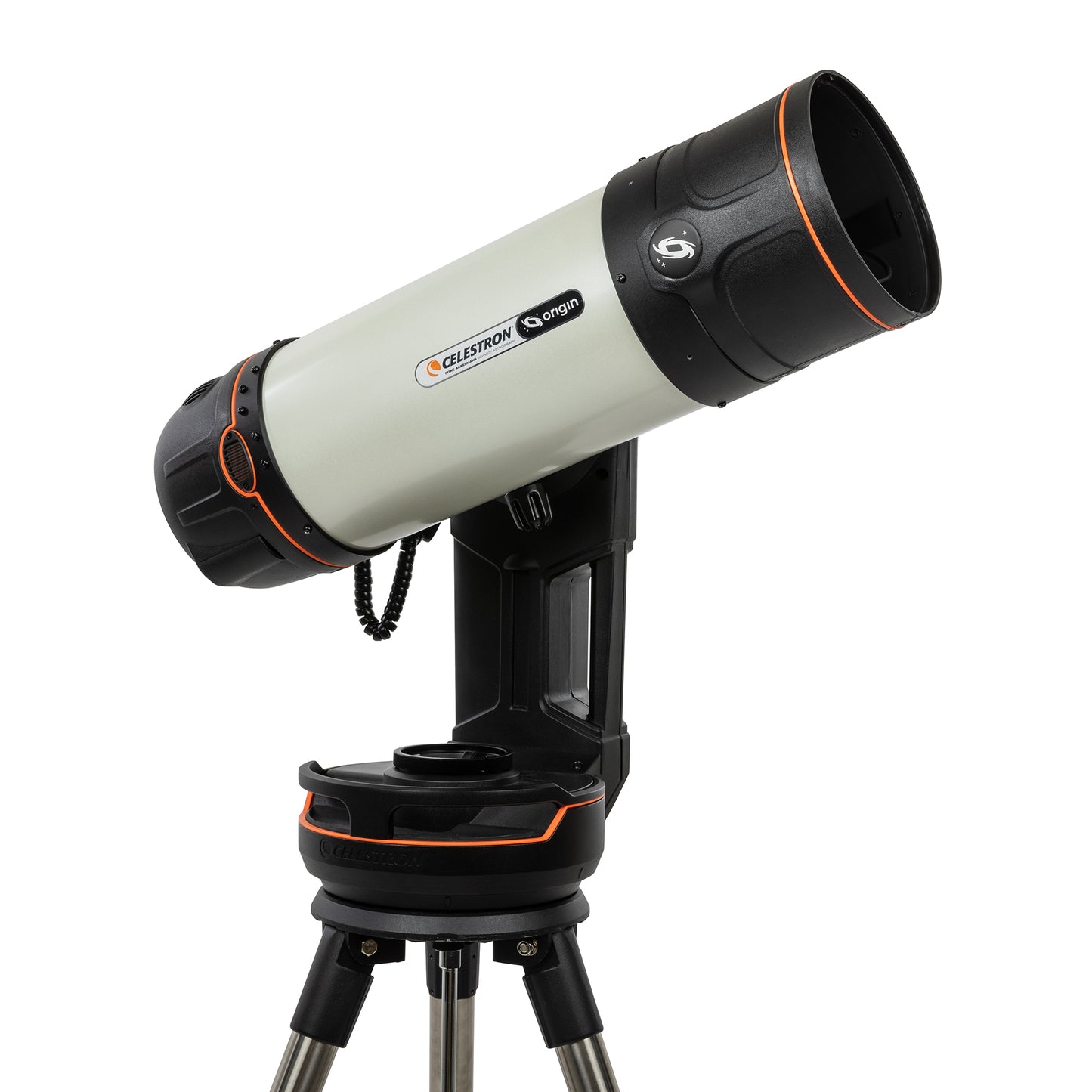
The Celestron Origin is a true home observatory built around an ultra-fast professional optical system. It is the ultimate instrument for capturing maximum light in minimum time.
Unlike brands that emerged during the digital era, Celestron is a legendary company with a long history in automated astronomy.
While many smart telescopes focus on convenience and portability, the Celestron Origin makes no compromises. Its Rowe-Ackermann Schmidt Astrograph (RASA) optics—historically reserved for professional astrophotographers with large budgets, allow it to capture enormous amounts of light at incredible speed.
With its ultra-fast f/2.2 focal ratio, the Celestron Origin is a true “photon funnel.” In mere seconds, it can achieve what would take much longer with most other telescopes.
AI-assisted live stacking brings galaxy spiral arms to life almost instantly. It is the perfect telescope for backyard astronomers seeking breathtaking images and willing to invest in premium equipment.
The “planet killer” of the digital era, built around a Maksutov-Cassegrain optical system.
While many smart telescopes are optimized for nebula observation, the SkyPilot 127 Mak from Spectrum Optics specializes in planetary viewing.
Nicknamed the “planet killer” by enthusiasts, it uses Maksutov-Cassegrain optics, an ingenious design that folds an extremely long optical path into a compact tube, enabling spectacular magnification.
The SkyPilot 127 Mak removes the frustration of manual alignment or trying to find a planet at high magnification. It automatically locates targets and keeps them centered for effortless observing.
It also performs exceptionally well under urban light pollution, making it ideal even from a brightly lit balcony in downtown Montreal.

| Model | Approx. Price | Ease of Use | Image Quality | Portability | Best For |
|---|---|---|---|---|---|
| Dwarf Mini | $ | ⭐⭐⭐⭐⭐ | ⭐⭐⭐ | ⭐⭐⭐⭐⭐ | Hikers / Curious beginners |
| Seestar S30 | $ | ⭐⭐⭐⭐⭐ | ⭐⭐⭐⭐ | ⭐⭐⭐⭐⭐ | Beginners / Travelers |
| Dwarf III | $$ | ⭐⭐⭐⭐⭐ | ⭐⭐⭐⭐ | ⭐⭐⭐⭐⭐ | Nomads / Nature photographers |
| Seestar S30 Pro | $$ | ⭐⭐⭐⭐⭐ | ⭐⭐⭐⭐ | ⭐⭐⭐⭐⭐ | Advanced hobbyists / Travelers |
| SkyPilot 127 | $$ | ⭐⭐⭐⭐ | ⭐⭐⭐⭐ | ⭐⭐⭐ | Solar system enthusiasts |
| Vespera III | $$$ | ⭐⭐⭐⭐ | ⭐⭐⭐⭐⭐ | ⭐⭐⭐ | Tech enthusiasts |
| Unistellar Odyssey | $$$ | ⭐⭐⭐⭐⭐ | ⭐⭐⭐⭐⭐ | ⭐⭐⭐⭐ | Families / Group sharing |
| Vespera Pro II | $$$$ | ⭐⭐⭐⭐ | ⭐⭐⭐⭐⭐ | ⭐⭐⭐ | Serious astrophotographers |
| Odyssey Pro | $$$$ | ⭐⭐⭐⭐⭐ | ⭐⭐⭐⭐⭐ | ⭐⭐⭐⭐ | Traditionalists / Versatile users |
| eQuinox 2 | $$$$ | ⭐⭐⭐⭐ | ⭐⭐⭐⭐⭐ | ⭐⭐ | Outreach & group observing |
| eVscope 2 | $$$$ | ⭐⭐⭐⭐ | ⭐⭐⭐⭐⭐ | ⭐⭐ | Passionate stationary observers |
| Celestron Origin | $$$$ | ⭐⭐⭐ | ⭐⭐⭐⭐⭐ | ⭐ | Home observatories / Experts |
If you need a quick recommendation:
The best telescope is ultimately the one you’ll use the most.
At Astronomy Plus, we are passionate about the night sky, and our team is here to guide you toward the model that perfectly matches your expectations.
Feel free to contact us with any questions, or visit us in-store in Longueuil to discover these technological marvels for yourself!
{"one"=>"Select 2 or 3 items to compare", "other"=>"{{ count }} of 3 items selected"}
Leave a comment