We Have it in Stock? We're on it, shipping your order on the same day.
*Ordered before 2PM ET & Business Hours only / This is an estimation and may vary
What if the product is not in stock?
🛫 If the item is unavailable: It may be in transit to us or on order with the supplier. If not, we will promptly place the order. In case of delays, we will do our best to keep you informed. Don't hesitate to email us for delays.
🇨🇦 Canadian Authorized Dealer
Buy with confidence from a trusted Canadian astronomy retailer. We provide full pre-sale and after-sale support, expert advice, warranty assistance, and real technical help from passionate astronomers.
Share:
Player One Uranus-M USB3.0 Mono Camera IMX585 (Uranus-M)
Camera:Camera
ASTRONOMY PLUS
Pickup available,
Usually ready in 2 hours
3008 Rue Brodeur O Unité 307 Saint Alphonse De Granby QC J0E 2A0 Canada
4504635072
Player One Uranus-M USB3.0 Mono Camera IMX585 (Uranus-M)
Player One Uranus-M USB3.0 Mono Camera IMX585 (Uranus-M) - Camera
is backordered and will ship as soon as it is back in stock.
Player One Uranus-M USB3.0 Mono Camera IMX585
Design for planetary imaging and EAA & Lucky imaging!
Uranus-M and Uranus-C are not only used for planetary imaging, but are also very powerful for EAA and Lucky imaging!
Product Detail
Uranus-M is (IMX585) camera developed by Player One Astronomy, which adopts thenewest Sony IMX5851/1.2” formatmonochrome sensor. The2.9um pixel size accommodates a well depth of47Kewith a total of 8.3MP (the resolution is 3856*2180),and the diagonal is12.85mm.
STARVIS 2 Technology
Uranus-M (IMX585) and Uranus-C (IMX585) based onSony newest STARVIS 2 technology, it is back-illuminated pixel technology used in CMOS sensors.
Format
Uranus-M (IMX585) has 1/1.2″ format, this size is quite big for imaging.
Full well
Uranus-M (IMX585) has 47Ke full well, it’s almost 3.6 times than IMX485 (13Ke).
Highlights
HDR model
HDR (High Dynamic Range) mode is a new feature of IMX585 cameras, it will provide larger dynamic range and lower readout noise.
This feature will help users get better images in DSO imaging.
Biggest surprise of Uranus-M (IMX585) camera is, its dark frame is totally “dark”, whatever we strength the curve, there is no AMP glow at all!
300s dark frame of Uranus-M camera(resize to 50%):
Non-Amp-Glow can give us very clean background, much easier to get high quaility images.
Recommended accessories:
ACS (Active Cooling System)is a external air-cooled system, designed for solar and big format planetary cameras which already has PCS (Passive Cooling System).
ACS can provide much better temperature control. When camera has PCS + ACS, temperature is only 7℃ higher than ambient, camera body is a little warm but won’t hot!
ACS is not only can be used in daylight for solar imaging, it also could be used in night for DSO lucky imaging.
The naming of Player One Astronomy cameras is unique. Planetary camera line, naming depend on the size of planets, Mars(1/3″), Neptune(1/2″), Uranus(1/1.2″), Saturn(1″), Jupiter(4/3″).
The planetary cameras developed by Player One Astronomy uses a scientific and technological regular hexagon to construct the main body line, supplemented by round chamfers to achieve both rigidity and flexibility. The positive red, which is like a summer fire, is matched with the low-key and steady black, and the super-fine frosting process on the entire surface makes the camera look luxurious and cool, highlighting the style of high-end players, can’t take my eyes off 😀
2nd Gen – Sensor Tilt Plate
When taking deepsky objects, using sensor tilt plate can get a much smaller field curvature of the telescope.
The built-in high-density sponge shading pad can block the light from the side slits without any side leakage.
Passive Cooling System
Player One add a new feature called Passive Cooling System to conduct the heat from the sensor out.
256M DDR3 Cache
Player One Astronomy cameras are the first one who adopts the DDR3 cache in all planetary cameras in the world! It helps stabilize and secure data transmission, it effectively avoids frame dropping and greatly reduces readout noise.
With the DDR3 cache, the camera does not have high demands on computing needs any longer, it will still has excellent performance even if it is connected to a USB 2.0 port.
DPS technology
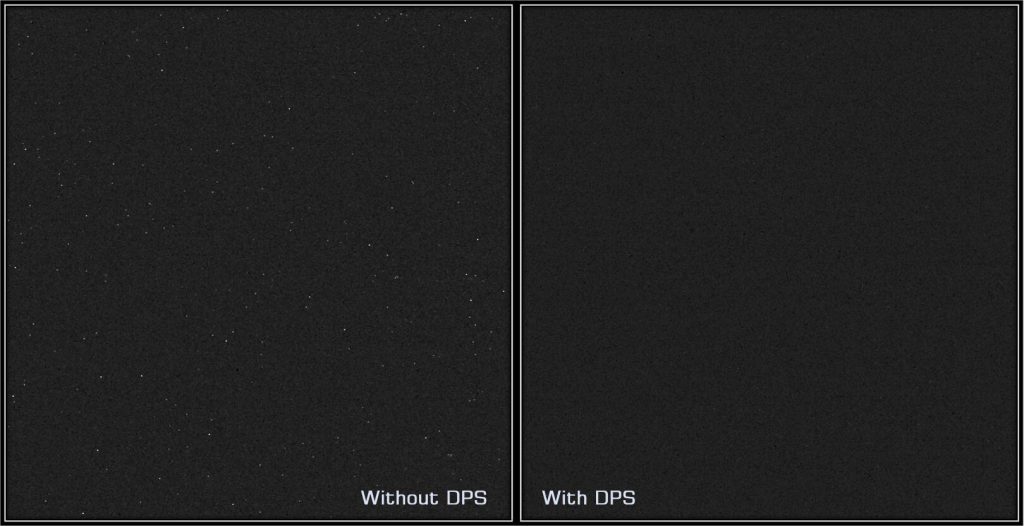
The planetary cameras from Player One Astronomy have DPS (Dead Pixel Suppression) technology. The DPS is anaylse many dark frames to find out thoes fixed abnormal pixel and record the map in camera memory. In imaging, each exposure frames, thoes position of dead pixels will be given a median value according to the active pixels around that abnormal pixel.
Overvoltage and overcurrent protection mechanism
Player One cameras produced by us ensures the safety of your camera and other equipment through overvoltage and overcurrent protection mechanisms.
Data Port
When the camera is connected to the USB3.0 interface and full-resolution preview is used, it can reach 47 FPS in RAW8 mode (10bit ADC). When recording images, since the actual writing speed will be affected by the writing speed of the hard disk itself, when the hard disk writing speed is slow, the recording may not reach the theoretical speed. It is recommended that you use a high-quality solid state drive to record data to give full play to the performance of the camera.
Use the ST4 guide cable to connect the camera and the AUTO GUIDE port of the equatorial mount to do guiding.
Performance
HCG open at gain=210.
Readout Noise
Regarding readout noise, we solemnly promise that all values are obtained from actual tests. And for users, you could use Sharpcap 4 for testing. SC4 has a function calledSensor Analysis, provide a very simple way to test readout noise.
If you are interested in readout noise testing, you may try it yourself, which is very simple.
QE Curve
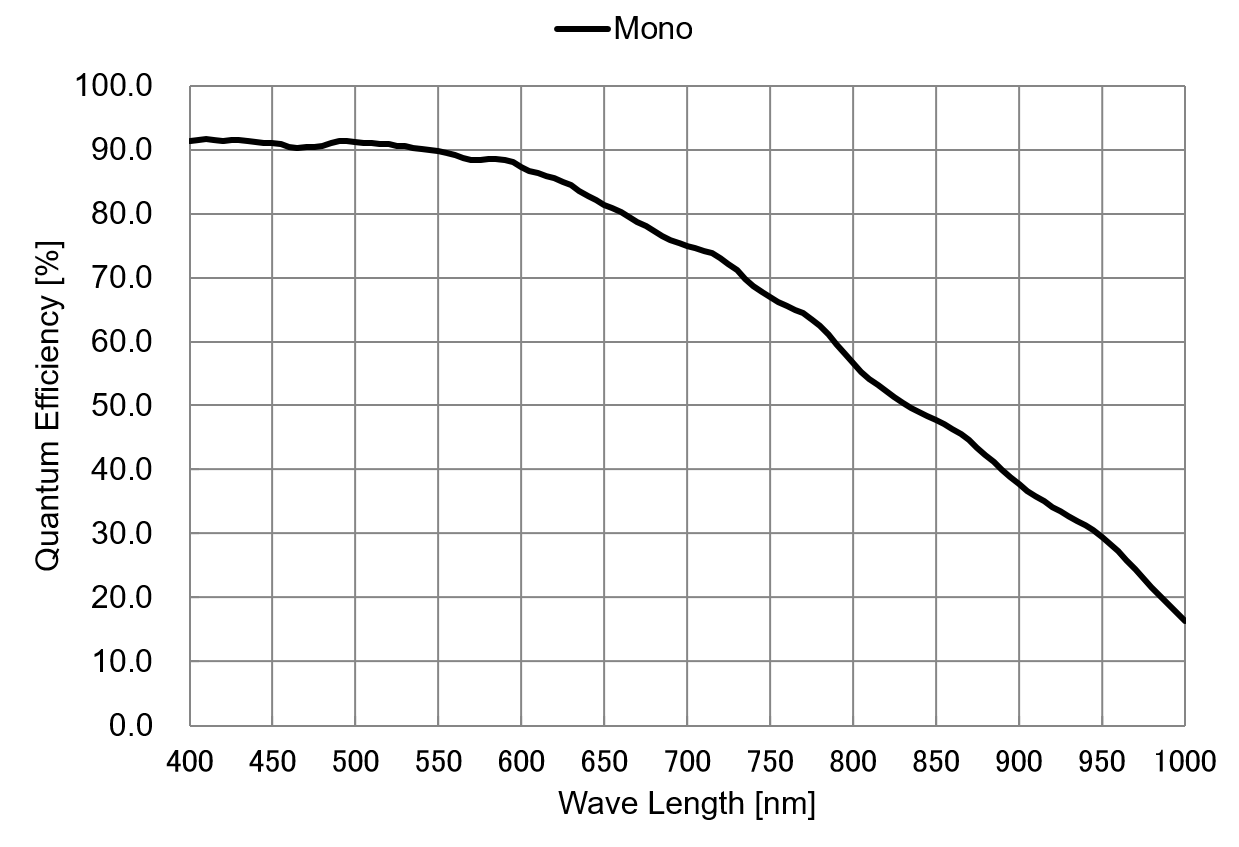
This relative response curve is provided by SONY Co., Ltd. This data is authentic and authoritative!
Mechanical Drawing
Technical Specifications
Sensor
New SONY IMX585 1/1.2" CMOS (Mono)
Diagonal
12.85mm
Total Pixels
8.3 Mega Pixels
Max Resolution
3856×2180
Pixel Size
2.9μm
lmage Size
11.2mm×6.3mm
Frame Rate
47FPS(10bit)
Shutter
Rolling shutter
Exposure Range
32μs-2000s
Readout Noise
7.2-0.7e
QE Peak
≈91%
Full Well
47k e
ADC
12 bit
Data Port
USB3.0/USB2.0
Adapter
1.25″ / M42X0.75
Back Focal Length
12.5mm
Protective Window
D32*2MM High Quality AR Plus (Anti Reflection) Multi-Layer Coating
Diameter
66mm
Weight
160g
Resolution and FPS
Under USB3.0 mode Resolution Raw8 Raw16 3856×2180 46FPS 23FPS 3840×2160 47FPS 23.5FPS 2560 x 1440 105FPS 53FPS 1920×1080 187FPS 93.5FPS 1280×720 286FPS 188FPS 800×600 340FPS 223FPS 640×480 418FPS 275FPS More resolution options could be setup in capture softewares!
You will receive an email when your post is approved
Please leave this popup open whilst your media is uploading
From our customers
Comments
Be the first to comment!
Shop This Post
Price:
Original price:
Your cart
Player One
Player One Uranus-M USB3.0 Mono Camera IMX585 (Uranus-M)
Regular priceFrom$61500
Unit price
Player One Uranus-M USB3.0 Mono Camera IMX585
Design for planetary imaging and EAA & Lucky imaging!
Uranus-M and Uranus-C are not only used for planetary imaging, but are also very powerful for EAA and Lucky imaging!
Product Detail
Uranus-M is (IMX585) camera developed by Player One Astronomy, which adopts thenewest Sony IMX5851/1.2” formatmonochrome sensor. The2.9um pixel size accommodates a well depth of47Kewith a total of 8.3MP (the resolution is 3856*2180),and the diagonal is12.85mm.
STARVIS 2 Technology
Uranus-M (IMX585) and Uranus-C (IMX585) based onSony newest STARVIS 2 technology, it is back-illuminated pixel technology used in CMOS sensors.
Format
Uranus-M (IMX585) has 1/1.2″ format, this size is quite big for imaging.
Full well
Uranus-M (IMX585) has 47Ke full well, it’s almost 3.6 times than IMX485 (13Ke).
Highlights
HDR model
HDR (High Dynamic Range) mode is a new feature of IMX585 cameras, it will provide larger dynamic range and lower readout noise.
This feature will help users get better images in DSO imaging.
Biggest surprise of Uranus-M (IMX585) camera is, its dark frame is totally “dark”, whatever we strength the curve, there is no AMP glow at all!
300s dark frame of Uranus-M camera(resize to 50%):
Non-Amp-Glow can give us very clean background, much easier to get high quaility images.
Recommended accessories:
ACS (Active Cooling System)is a external air-cooled system, designed for solar and big format planetary cameras which already has PCS (Passive Cooling System).
ACS can provide much better temperature control. When camera has PCS + ACS, temperature is only 7℃ higher than ambient, camera body is a little warm but won’t hot!
ACS is not only can be used in daylight for solar imaging, it also could be used in night for DSO lucky imaging.
The naming of Player One Astronomy cameras is unique. Planetary camera line, naming depend on the size of planets, Mars(1/3″), Neptune(1/2″), Uranus(1/1.2″), Saturn(1″), Jupiter(4/3″).
The planetary cameras developed by Player One Astronomy uses a scientific and technological regular hexagon to construct the main body line, supplemented by round chamfers to achieve both rigidity and flexibility. The positive red, which is like a summer fire, is matched with the low-key and steady black, and the super-fine frosting process on the entire surface makes the camera look luxurious and cool, highlighting the style of high-end players, can’t take my eyes off 😀
2nd Gen – Sensor Tilt Plate
When taking deepsky objects, using sensor tilt plate can get a much smaller field curvature of the telescope.
The built-in high-density sponge shading pad can block the light from the side slits without any side leakage.
Passive Cooling System
Player One add a new feature called Passive Cooling System to conduct the heat from the sensor out.
256M DDR3 Cache
Player One Astronomy cameras are the first one who adopts the DDR3 cache in all planetary cameras in the world! It helps stabilize and secure data transmission, it effectively avoids frame dropping and greatly reduces readout noise.
With the DDR3 cache, the camera does not have high demands on computing needs any longer, it will still has excellent performance even if it is connected to a USB 2.0 port.
DPS technology
The planetary cameras from Player One Astronomy have DPS (Dead Pixel Suppression) technology. The DPS is anaylse many dark frames to find out thoes fixed abnormal pixel and record the map in camera memory. In imaging, each exposure frames, thoes position of dead pixels will be given a median value according to the active pixels around that abnormal pixel.
Overvoltage and overcurrent protection mechanism
Player One cameras produced by us ensures the safety of your camera and other equipment through overvoltage and overcurrent protection mechanisms.
Data Port
When the camera is connected to the USB3.0 interface and full-resolution preview is used, it can reach 47 FPS in RAW8 mode (10bit ADC). When recording images, since the actual writing speed will be affected by the writing speed of the hard disk itself, when the hard disk writing speed is slow, the recording may not reach the theoretical speed. It is recommended that you use a high-quality solid state drive to record data to give full play to the performance of the camera.
Use the ST4 guide cable to connect the camera and the AUTO GUIDE port of the equatorial mount to do guiding.
Performance
HCG open at gain=210.
Readout Noise
Regarding readout noise, we solemnly promise that all values are obtained from actual tests. And for users, you could use Sharpcap 4 for testing. SC4 has a function calledSensor Analysis, provide a very simple way to test readout noise.
If you are interested in readout noise testing, you may try it yourself, which is very simple.
QE Curve
This relative response curve is provided by SONY Co., Ltd. This data is authentic and authoritative!
Mechanical Drawing
Technical Specifications
Sensor
New SONY IMX585 1/1.2" CMOS (Mono)
Diagonal
12.85mm
Total Pixels
8.3 Mega Pixels
Max Resolution
3856×2180
Pixel Size
2.9μm
lmage Size
11.2mm×6.3mm
Frame Rate
47FPS(10bit)
Shutter
Rolling shutter
Exposure Range
32μs-2000s
Readout Noise
7.2-0.7e
QE Peak
≈91%
Full Well
47k e
ADC
12 bit
Data Port
USB3.0/USB2.0
Adapter
1.25″ / M42X0.75
Back Focal Length
12.5mm
Protective Window
D32*2MM High Quality AR Plus (Anti Reflection) Multi-Layer Coating
Diameter
66mm
Weight
160g
Resolution and FPS
Under USB3.0 mode Resolution Raw8 Raw16 3856×2180 46FPS 23FPS 3840×2160 47FPS 23.5FPS 2560 x 1440 105FPS 53FPS 1920×1080 187FPS 93.5FPS 1280×720 286FPS 188FPS 800×600 340FPS 223FPS 640×480 418FPS 275FPS More resolution options could be setup in capture softewares!
ZWO Seestar S50 Pro. Makes astrophotography easy. Great for beginners looking to get into the hobby. Lightweight and portable. Highly recommend this scope.
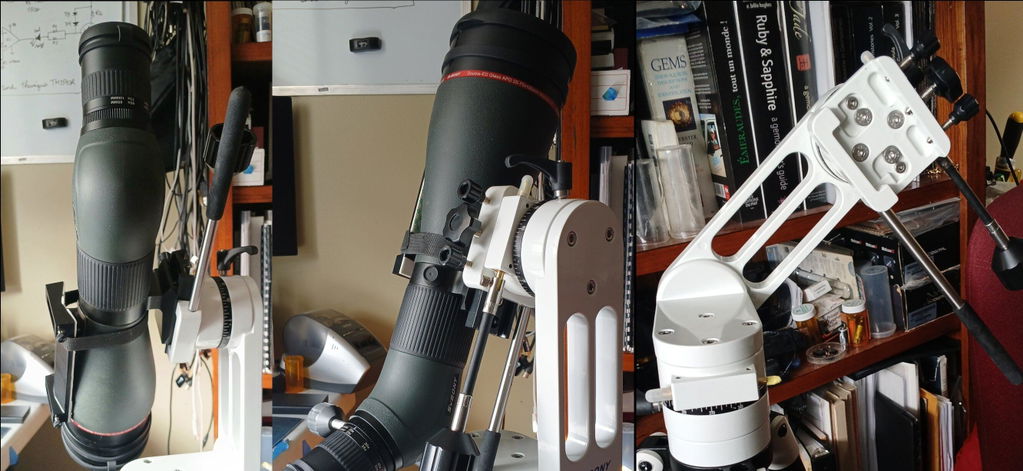
1. Construction robuste
2. Assemblage requis : habiletés mécaniques requises, particulièrement les précautions et les méthodes et ordres de serrage sécuritaire des vis Allen. Certaines vis sont difficiles à desserrer ou à serrer adéquatement.
3. Montage configurable selon les préférences de l’observateur :
a. Orientation à droite ou à gauche du module d’altitude à queue d’aronde
b. Orientation des câbles d’ajustement fins selon les préférences de l’observateur en démontant et réorientant soit le bloc de queue d’aronde pour l’altitude, soit en démontant et réorientant la base du module d’altitude, pour le câble d’azimuts.
c. Dans sa position verticale, la monture permet d’orienter l’instrument entre -60° à +60 d’altitude, les objets au zénith ne sont pas accessibles. Il est possible de monter en diagonale l’axe d’altitude, le zénith devient accessible, mais le centre de gravité de la monture se trouve déplacé, attention.
d. Les ajustements fins procurent un mouvement très doux et constant.
e. Les manettes de verrouillages des axes sont ajustables dans une position confortable par un mécanisme à ressort qui permet d’orienté les manettes.
f. Le verrouillage des axes ne verrouille que les déplacements rapides et n’affecte pas les réglages fins par flexibles qui sont des mécanismes indépendants.
4. S’adapte parfaitement au trépied Sky-Watcher Star adventurer
5. Comme toujours un manuel d’instruction mal rédigé avec traductions douteuse ou simplement laissée en anglais.
6. Un accessoire présent dans la boîte qui n’est pas dans le manuel, c’est une barre butoir qui protège contre les dommages possibles au tube optique si l’observateur ajuste l’altitude rapidement sans se méfier au-delà du +60°. Le butoir empêche le tube de frapper la base de la monture en bloquant le mouvement.
7. Monture idéale pour mon SA401 100mm APO ED dédié aux observations de la nature et occasionnellement des observations astronomiques.
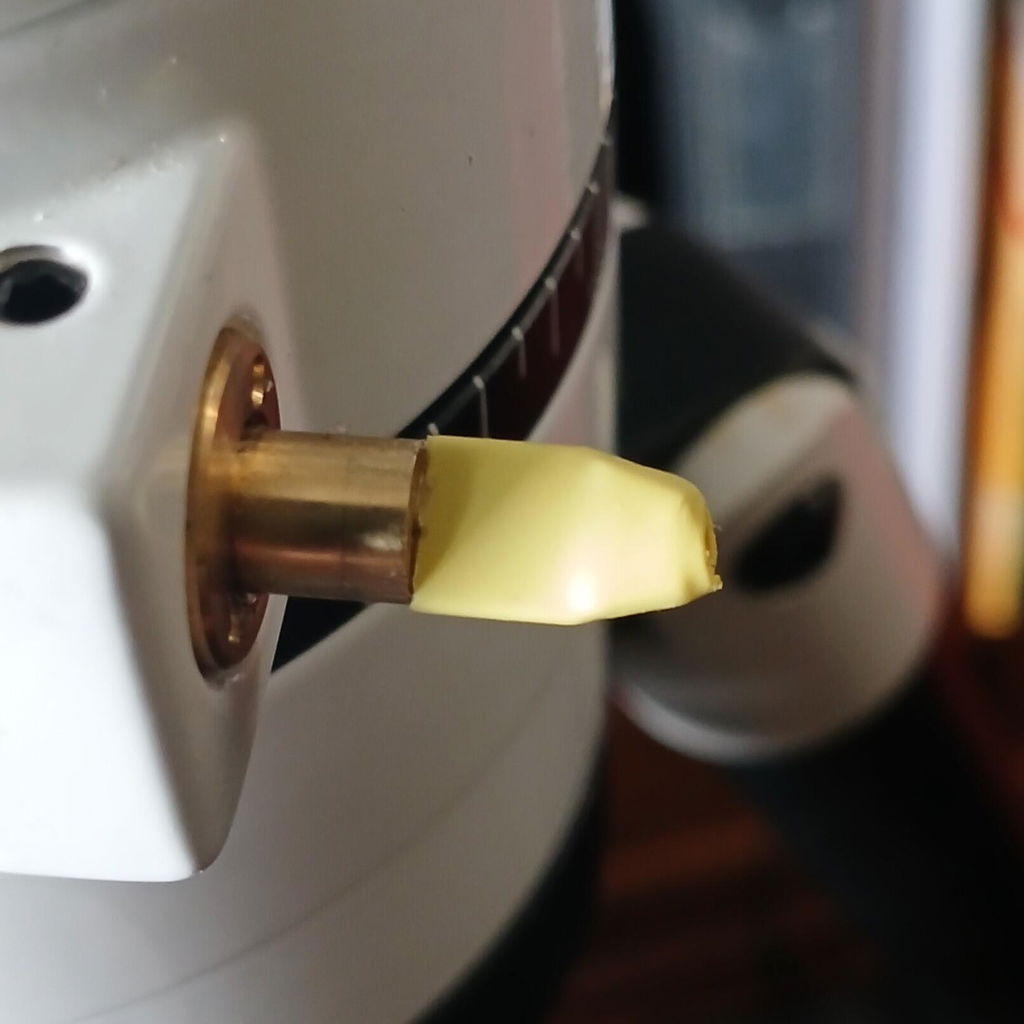
8. Pour éviter que les manettes de réglage fin ne se desserrent, j'ai ajouté une gaine thermorétractable sur l'embout en laiton où se connectent les flexibles. Une fois vissées, les manettes restent bien en place.
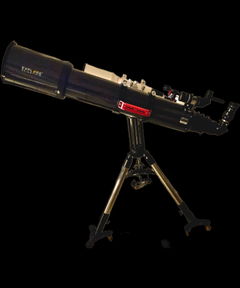
This 80 mm F5 telescope is very impressive
Pros. Excellent optics very light weight
Cons. Tripod and finder scope are almost unusable. Change to a 90 degree diagonal and purchase a better quality tripod
Still well worth the money. May be buying a second one
J’ai échangé mon S50 pour le nouveau S50 Pro et je suis très satisfait. De plus, l’application est régulièrement mise à jour pour offrir plus de possibilités et de facilité. J’adore l’utiliser pour empiler des photos d’astres lointaines pendant que je fais de l’observation visuelle avec mon SCT.
Viclens.ca
I love the double stack
I love the double stack, it was tough to find online, and this was the only store that had it, the shipping was very fast and very well packaged.
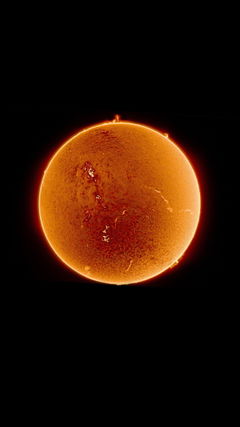
Lunt 60mm Ha Etalon Filter (LS60FHaP) - New Gen Etalon
Yosmany Castaneda
Excellent camera for "Lucky imaging" of planets
Excellent camera for "Lucky imaging" of planets.
ZWO ASI585MC USB3.0 Color Astronomy Camera - OPEN BOX (ASI585MC)
David W Vandenberg
Excellent Service
Products as described, arrived 3 days before due date.
This is a great deep sky scope, and I am looking forward to getting some great pictures with it, all I need now are some clear skies (it's raining at the moment)
Astronomy Plus Pier Extension for ZWO, iOptron and Sky-Watcher Mounts
Claude Lamarre
ASTRONOMIK MC CLEAR FILTER 2’’ SCT 24 TPI
Se visse directement sur l’adaptateur 2’’ SCT 24 TPI
ASTRONOMIK MC CLEAR FILTER 2’’ SCT 24 TPI
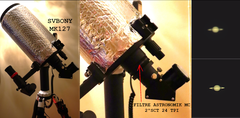
Se visse directement sur l’adaptateur 2’’ SCT 24 TPI , votre dos visuel se visse sur le ASTRONOMIK MC CLEAR FILTER 2’’ SCT 24 TPI.
1) Permet de sceller le tube optique. Une touche de graisse de silicone pure, de qualité, celle pour les équipements de plongée assure l’étanchéité.
2) Empêche les contaminants de s’infiltrer
3) Empêche l’effet cheminée lorsqu’on change un oculaire ou un accessoire par temps froids.
4) Combiné à une isolation thermique de l'OTA un isolant thermique à double face genre REFLECTIX, permet de sortir l’instrument d’un local chauffé vers la température frigide extérieure pour observer immédiatement sans attendre l’équilibrage des températures.
J’ai testé de 25C à 5C, sur deux nuits à l’oculaire clavé 10mm dès l’installation 5 minutes après la sortie de l’instrument, l’image est absolument nette avec seulement la turbulence d’un seeing de 3-4, et ce durant toute la durée de la séance.
Images de Saturne au MK127 de SVBONY F:1500mm, Caméra ZWO ASI 678MC au foyer primaire, Filtre 1.25" Baader contrast boost, capture .SER, Sharpcap, PIPP, AS4!, registax 6.
Les photos sont un stack des images brutes stabilisé de PIPP, et l'autre un léger traitement dans Registax 6.
Le 27 octobre vers 21h30 5 à 10 minutes après avoir sorti l’instrument, viewing 3/5. Hier avec barlow QT 2,25x Baader, résultat similaire. C'est ce que j'espérait, les tests se poursuivre.