Optolong IR Pass685 Planetary Filter
Optolong IR Pass685 Planetary Filter - 1.25" is backordered and will ship as soon as it is back in stock.
Pickup available at ASTRONOMY PLUS
Usually ready in 2 hours
FREE SHIPPING FOR ORDERS OVER $500* 🆓🚚
FREE SHIPPING FOR ORDERS OVER $500* 🆓🚚
*Some exceptions may apply. More info
We Have it in Stock? We're on it, shipping your order on the same day.
We Have it in Stock? We're on it, shipping your order on the same day.
*Ordered before 2PM ET & Business Hours only / This is an estimation and may vary
What if the product is not in stock?
What if the product is not in stock?
🛫 If the item is unavailable: It may be in transit to us or on order with the supplier. If not, we will promptly place the order. In case of delays, we will do our best to keep you informed. Don't hesitate to email us for delays.
🇨🇦 Canadian Authorized Dealer
🇨🇦 Canadian Authorized Dealer
Buy with confidence from a trusted Canadian astronomy retailer. We provide full pre-sale and after-sale support, expert advice, warranty assistance, and real technical help from passionate astronomers.

Optolong IR Pass685 Planetary Filter

Optolong IR Pass685 Planetary Filter
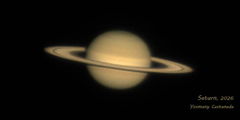
Optolong IR Pass 685nm filter is designed to block wavelengths below 670nm and can be used in IR-LRGB imaging to produce a sharper luminance image for the best planetary contrast as atmospheric seeing and distortion is much reduced at longer IR wavelengths.
The sensor of CCD or CMOS cameras is capable of detecting light in the 350-1100nm range including infrared wavelengths. Thus RGB planetary images taken with IR as the luminance channel have visible-enhanced contrast and surface detail than standard LRGB images.
Additionnal Features:
IR Pass 685nm filter is designed to block wavelengths below 670nm and can be used in IR-LRGB imaging to produce a sharper luminance image for the best planetary contrast as atmospheric seeing and distortion is much reduced at longer IR wavelengths.
Technical Specifications:
Sbustrate: B270
Thickness: 1.85mm
Tave: T>90%
Blocking range: 350-1050nm
Blcoking depth: light pollution line blocking >99%
Surface quality: 60/40
Transmitted Wavefront RMS: λ/4
Parallelism: 30s

How to read the chart?
▲The horizontal axis is the Wavelength in Nanometers(nm).
▲The vertical axis is transmission in %.