QHYCCD miniCAM8 M/C Deep Sky Camera & Combo
QHYCCD miniCAM8 M/C Deep Sky Camera & Combo - MiniCAM 8C (Color) is backordered and will ship as soon as it is back in stock.
Pickup available at ASTRONOMY PLUS
Usually ready in 2 hours
FREE SHIPPING FOR ORDERS OVER $500* 🆓🚚
FREE SHIPPING FOR ORDERS OVER $500* 🆓🚚
*Some exceptions may apply. More info
We Have it in Stock? We're on it, shipping your order on the same day.
We Have it in Stock? We're on it, shipping your order on the same day.
*Ordered before 2PM ET & Business Hours only / This is an estimation and may vary
What if the product is not in stock?
What if the product is not in stock?
🛫 If the item is unavailable: It may be in transit to us or on order with the supplier. If not, we will promptly place the order. In case of delays, we will do our best to keep you informed. Don't hesitate to email us for delays.
🇨🇦 Canadian Authorized Dealer
🇨🇦 Canadian Authorized Dealer
Buy with confidence from a trusted Canadian astronomy retailer. We provide full pre-sale and after-sale support, expert advice, warranty assistance, and real technical help from passionate astronomers.

QHYCCD miniCAM8 M/C Deep Sky Camera & Combo

QHYCCD MiniCAM8 Color / Mono Cooled Deep Sky Camera
At just over 4 inches in diameter and a few inches thick, the new miniCAM8 is a compact, high resolution, high performance, cooled imaging system capable of exceptional, high-quality deep space images as well as high-quality, high-resolution planetary images.
So often, compactness in astroimaging is achieved at the expense of some other critical feature found in multi-component cooled systems, such sensor quality or thermoelectric cooling, etc. Such is not the case with the new miniCAM8. Based on Sony’s IMX585 8 MP sensor, the miniCAM8 includes full TE cooling capable of reaching a delta of -45℃ from ambient along with a built-in 8-position filter wheel for complete LRGB and narrowband imaging.
 High Near-Infrared Sensitivity
The IMX585 is a Sony Starvis II processor that enables high sensitivity and high dynamic range (HDR). It also improves sensitivity in the near-infrared range by approximately 1.7 times* compared to the IMX485. The new camera QHY miniCAM8 has a maximum quantum efficiency of 60% in the near-infrared band and 92% in the visible wavelength band.
 BSI
One benefit of the back-illuminated CMOS structure is improved full-well capacity. This is particularly helpful for sensors with small pixels. In a typical front-illuminated sensor, photons from the target entering the photosensitive layer of the sensor must first pass through the metal wiring that is embedded just above the photosensitive layer. The wiring structure reflects some of the photons and reduces the efficiency of the sensor.
In the back-illuminated sensor, the light is allowed to enter the photosensitive surface from the reverse side. In this case, the sensor’s embedded wiring structure is below the photosensitive layer. As a result, more incoming photons strike the photosensitive layer, and more electrons are generated and captured in the pixel well. This ratio of photon to electron production is called quantum efficiency. The higher the quantum efficiency, the more efficient the sensor is at converting photons to electrons, and hence the more sensitive the sensor is to capturing an image of something dim.
 Zero Amplify Glow
QHY miniCAM8 is also a zero amplifer glow camera.
 Anti-Dew Technology
Based on almost 20-year cooled camera design experience, the QHY cooled camera has implemented the fully dew control solutions. The optic window has a built-in dew heater, and the chamber is protected from internal humidity condensation. An electric heating board for the chamber window can prevent the formation of dew, and the sensor itself is kept dry with our silicon gel tube socket design for control of humidity within the sensor chamber.
 Cooling
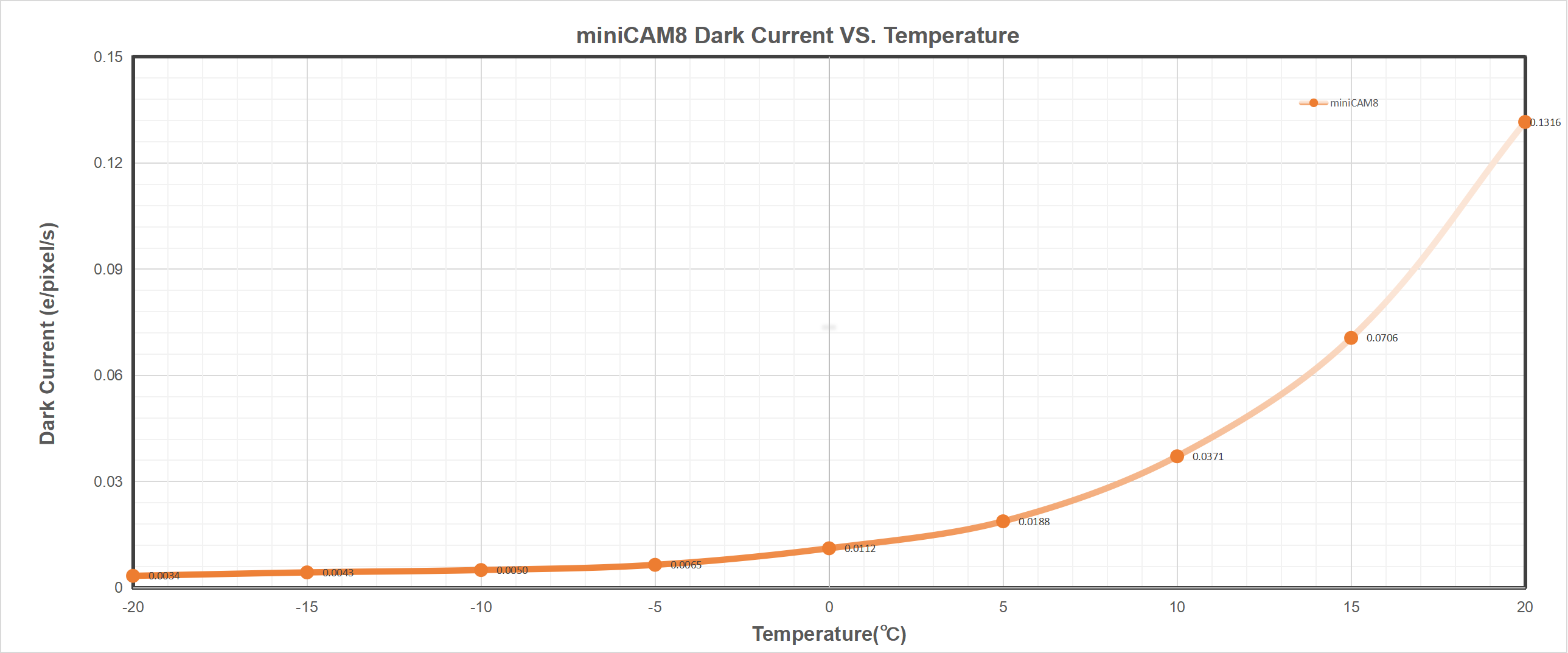
In addition to dual-stage TE cooling, QHYCCD implements proprietary technology in hardware to control the dark current noise.
 Linearity HDR Mode
The native ADC of the IMX585 sensor is 12-bit. Compared to 16-bit, the 12-bit depth offers fewer bits, resulting in a relatively narrower dynamic range, which may lead to issues such as insufficient color gradation and potential information loss. During the product development of miniCAM8, QHYCCD merged high and low gain to extend the data to 16-bit. However, since this 16-bit depth is not native, a sudden shift in linearity might occur, affecting the smooth transition in images. To address this, QHYCCD developed the “Linearity HDR” mode, which uses an algorithm-based approach to correct image linearity through software, ensuring smoother transitions and richer color representation.
See QHYCCD's website for Curve Graphs
Filters Introduction
The astronomical filters included with the miniCAM8 deepsky combos are custom-designed to match the specific characteristics of the cameras. The size is 19 mm * 12 mm * 1.1 mm. The LRGB and SHO narrowband filters for the miniCAM8M deepsky combo are customized by XiMei Filters. The LRGB filters have an optical density (OD) value of 3, while the narrowband filters have an OD value of 5.
The OD value, as a physical measure of the degree of light attenuation after passing through a filter, directly affects the filter’s ability to suppress unwanted light during imaging. A higher OD value indicates stronger suppression of stray light, effectively blocking most unnecessary light sources and thereby enhancing image contrast and detail clarity.
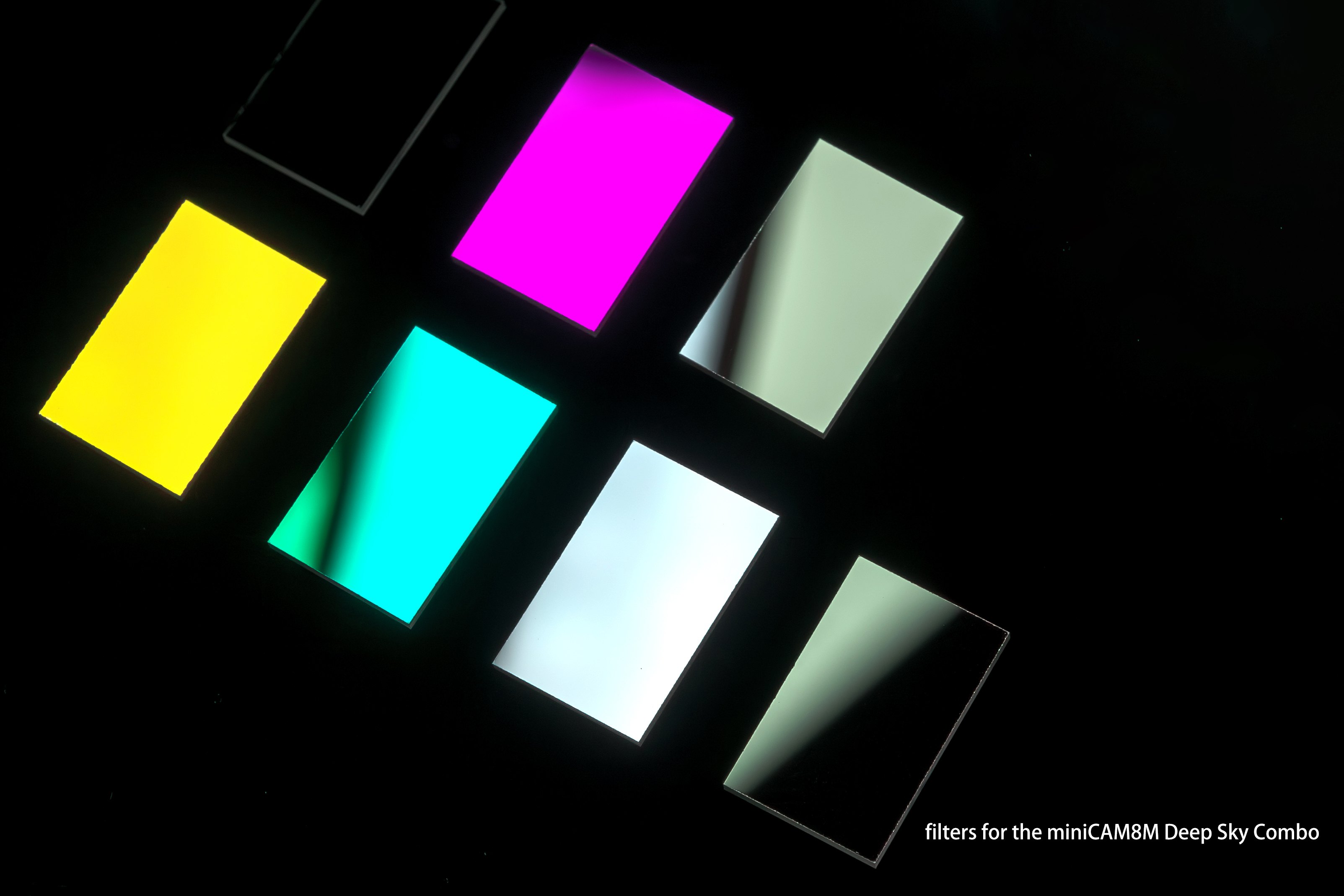
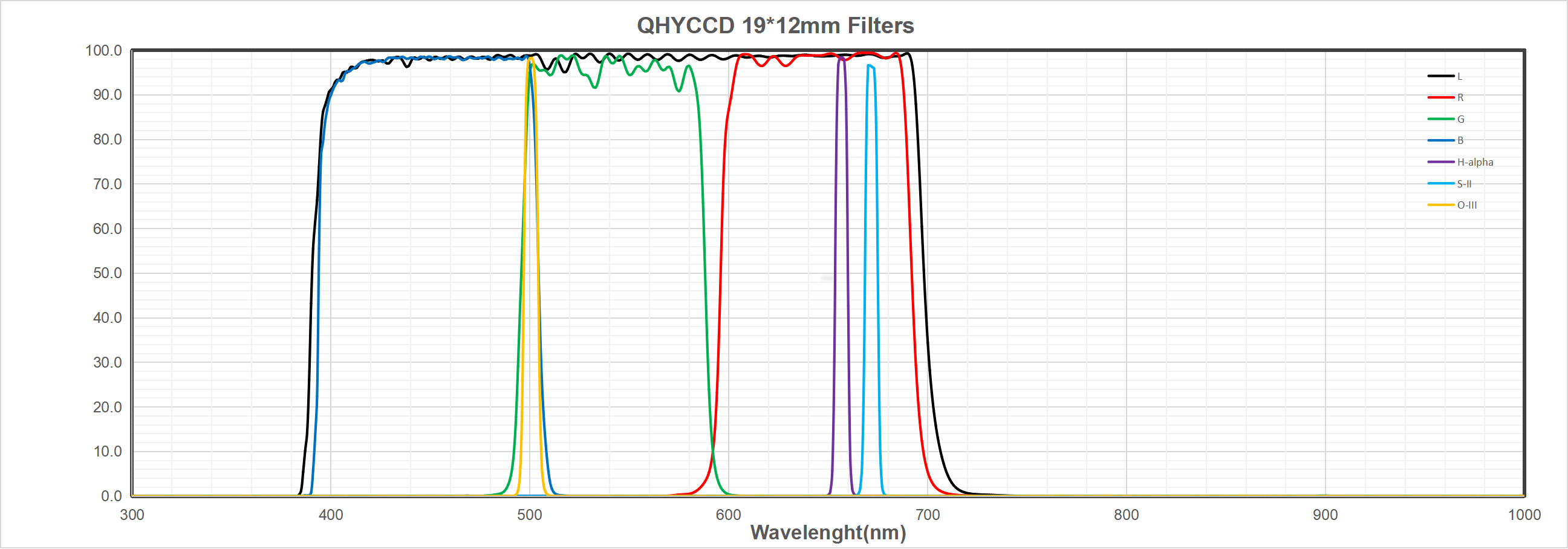
The filters provided with the miniCAM8C deepsky combo are customized by Optolong Optics. These include a light pollution filter, a heavy light pollution filter, a four-channel enhancement filter, and a UV/IR cut filter.
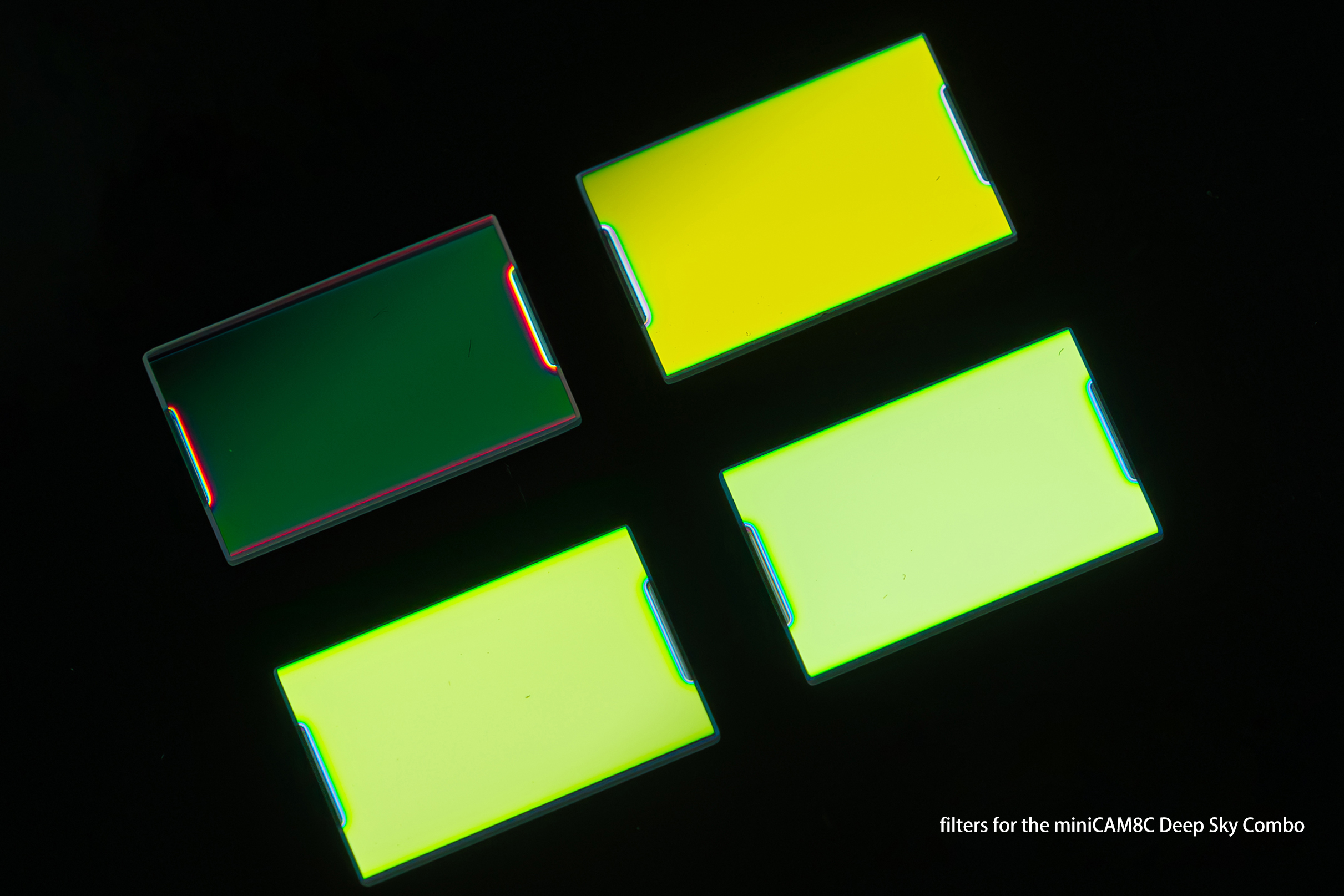
Sample Images
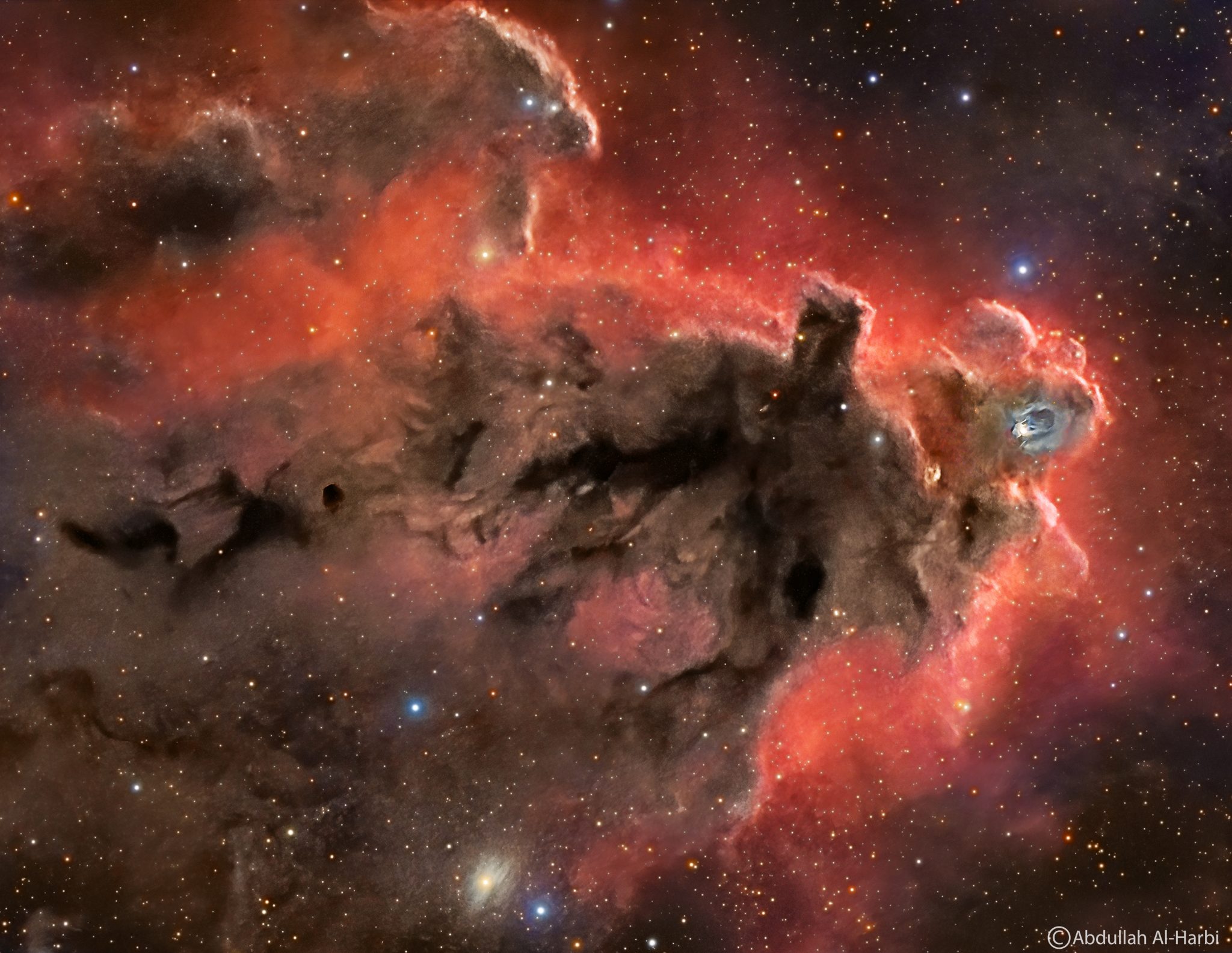 VdB 62 Nebula, By Abdullah Al-Harbi
- Camera: QHYCCD miniCAM8 Mono Deepsky Combo
- Telescope: Askar 600
- Mount: HAE EC 69
- Exposure: L 300*40, R 300*48, G 300*36, B 300*35, Ha 300*43
- Total integration: 16.8 hours
- Bortal class 5/6
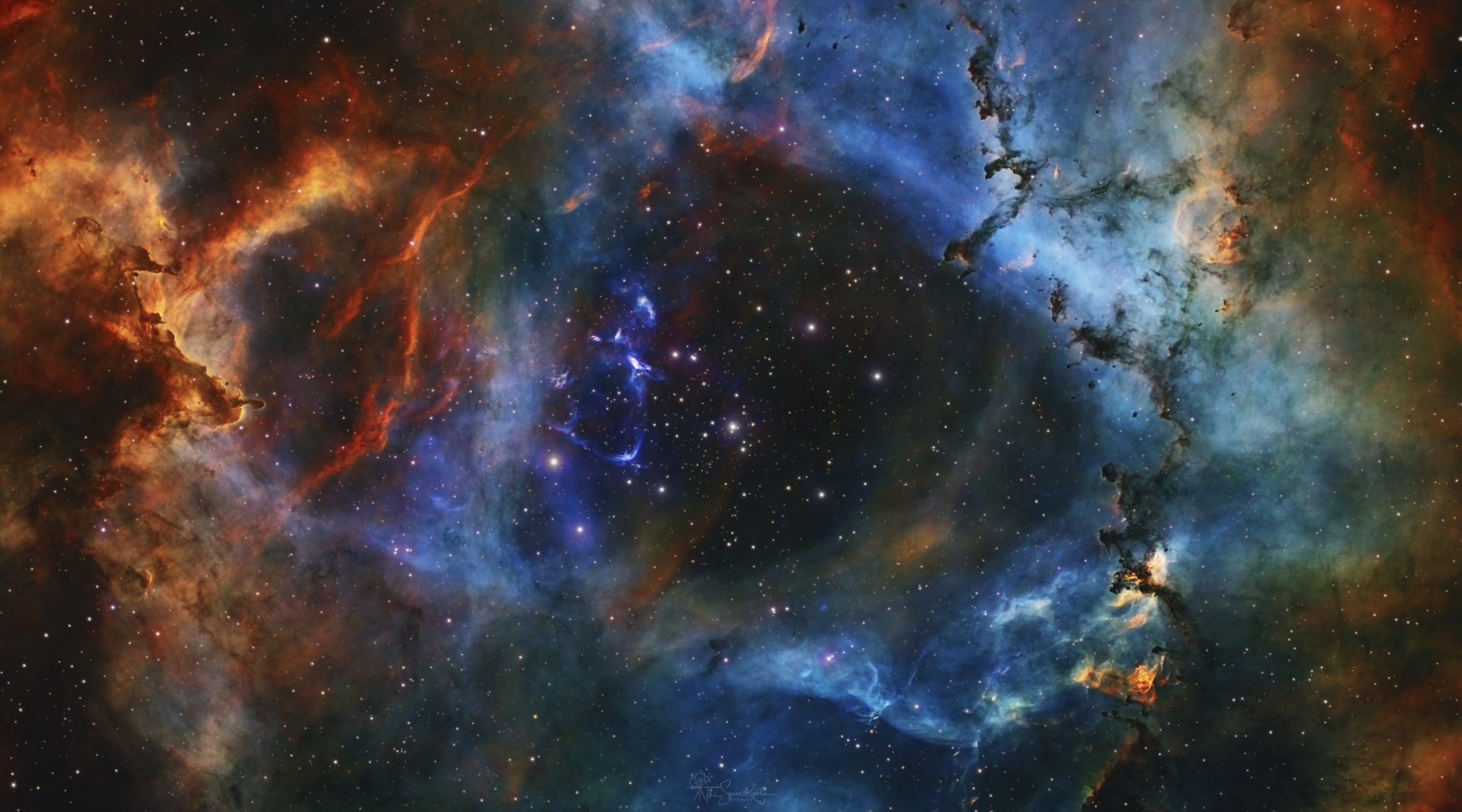 The Rosette Nebula, By Luca Bartek
- Camera: QHYCCD miniCAM8 Mono Deepsky Combo
- Telescope: Askar FRA600
- Exposure:
QHYCCD H-alpha 7nm: 38×600″(6h 20′)
QHYCCD OIII 7nm: 21×600″(3h 30′)
QHYCCD SII 7nm: 44×600″(7h 20′) - Integration: 17h 10′
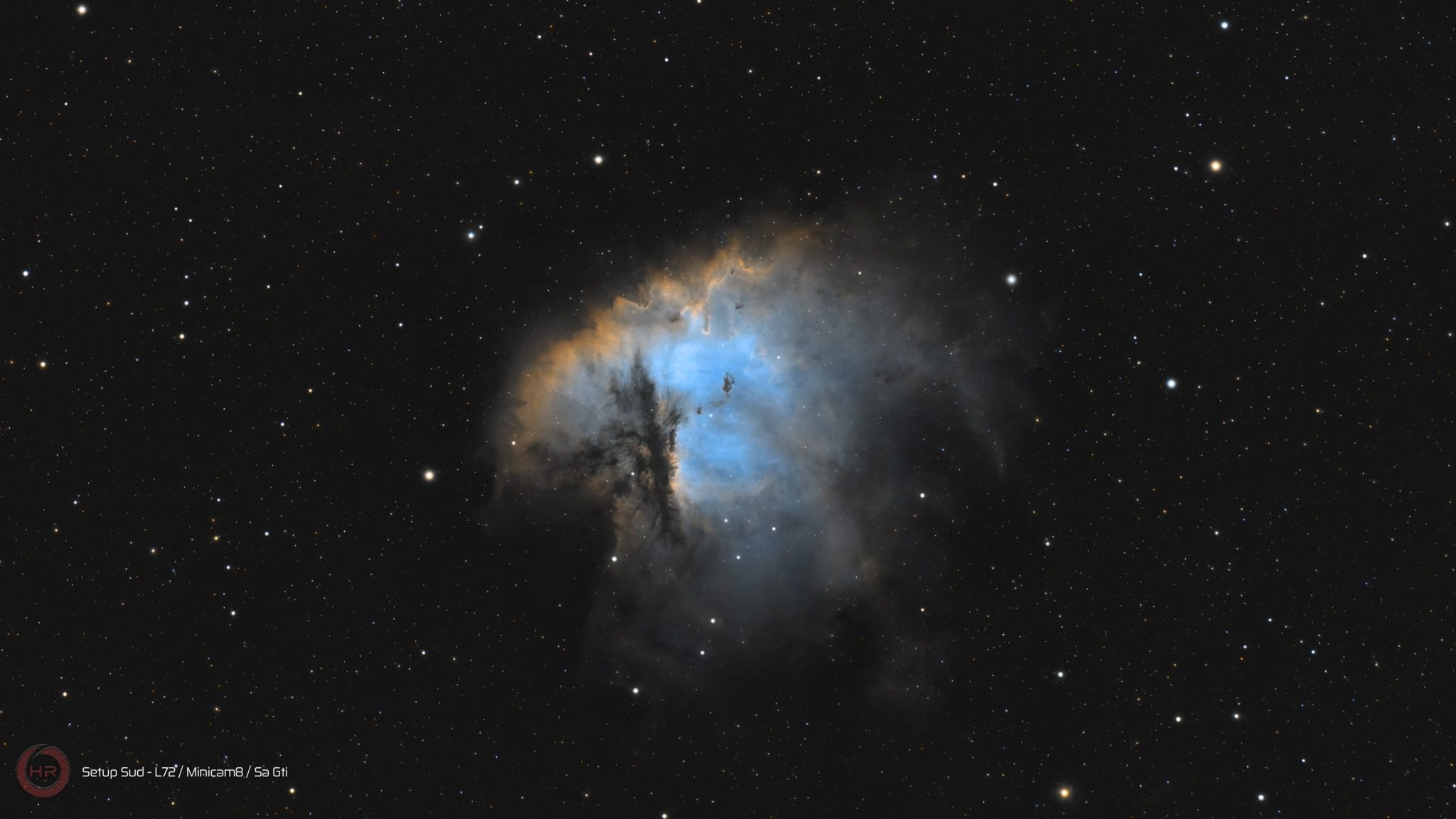 NGC 281, By Nicolas Bricaud
- Camera: miniCAM8M gain 78/ offset 50-Linearity HDR mode
- Telescope: doublet refractor TS72/420 ED with 0.79X corrector / reducer
- Mount: Sky-Watcher Star Adventurer Gti mount
- Frames: 5x300s with Sll filter, 10x300s with Ha filter and 5x300s with Olll filter
Graphics
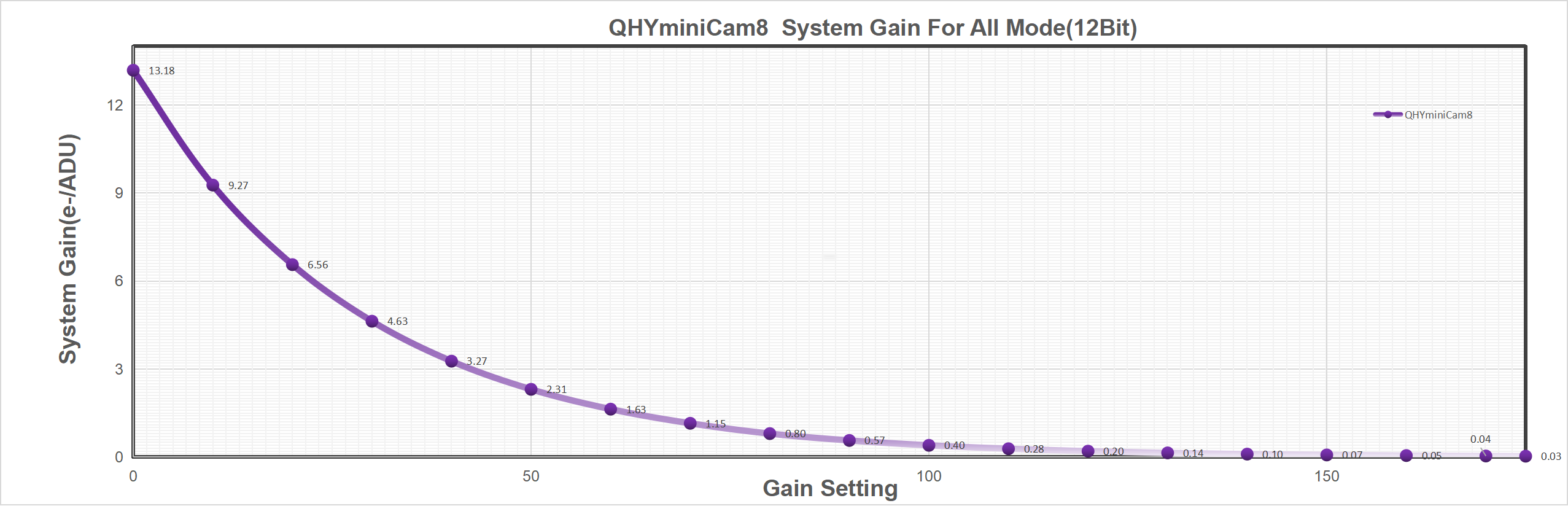
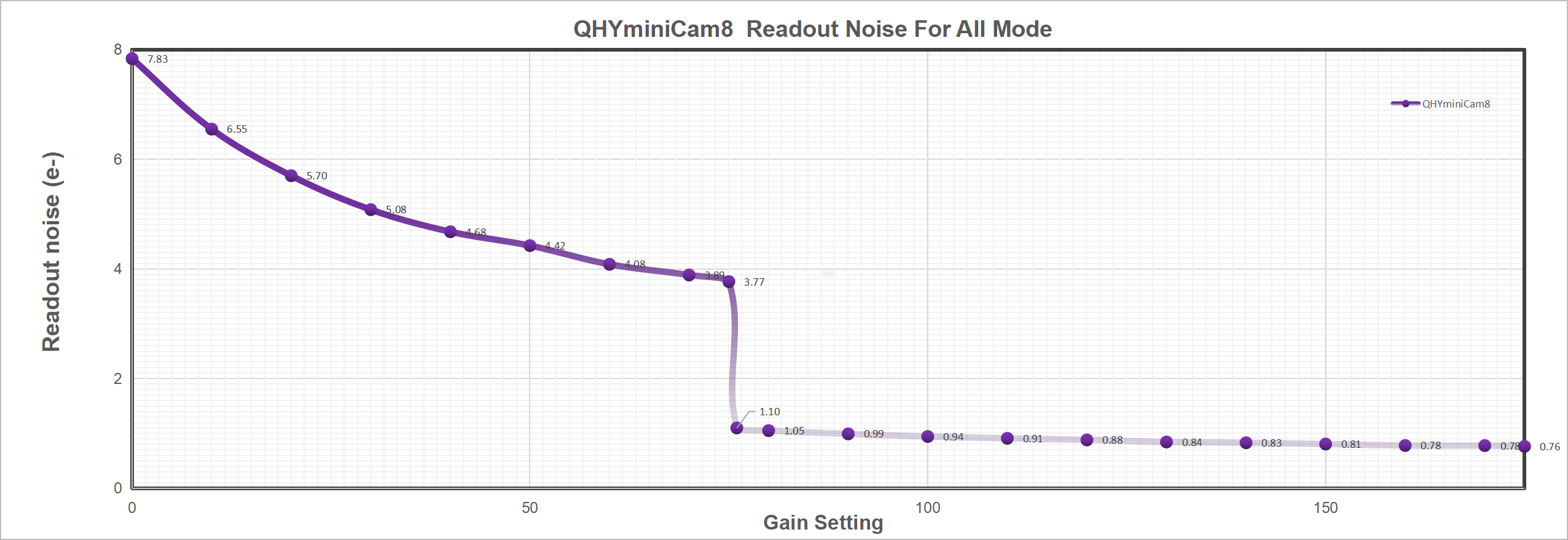
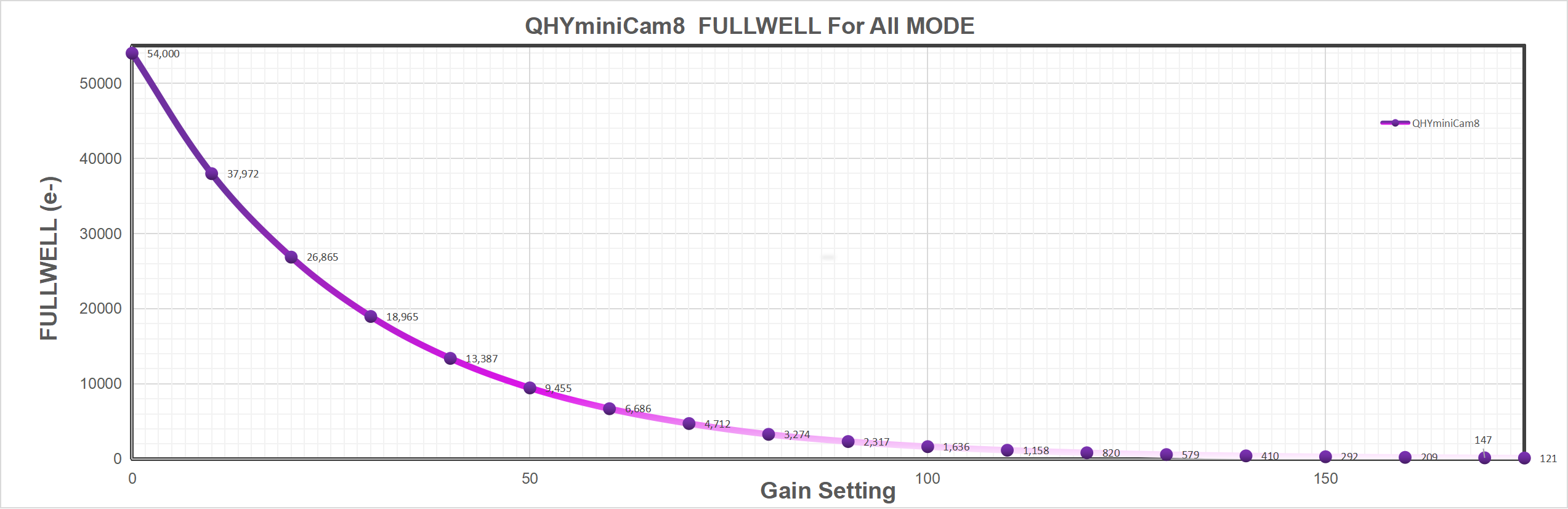
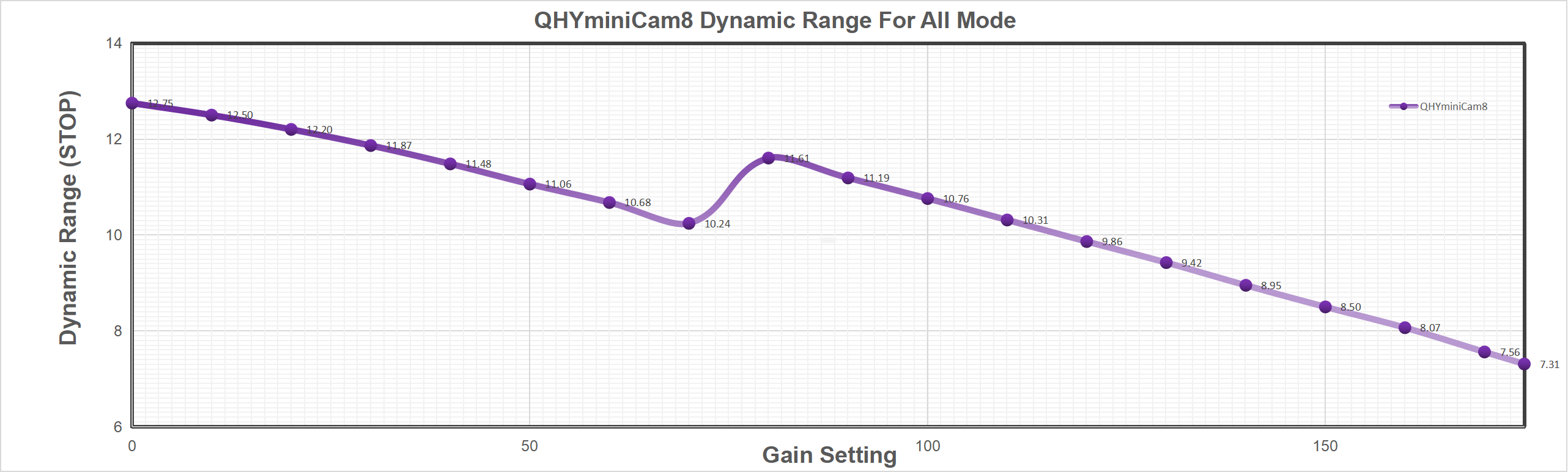
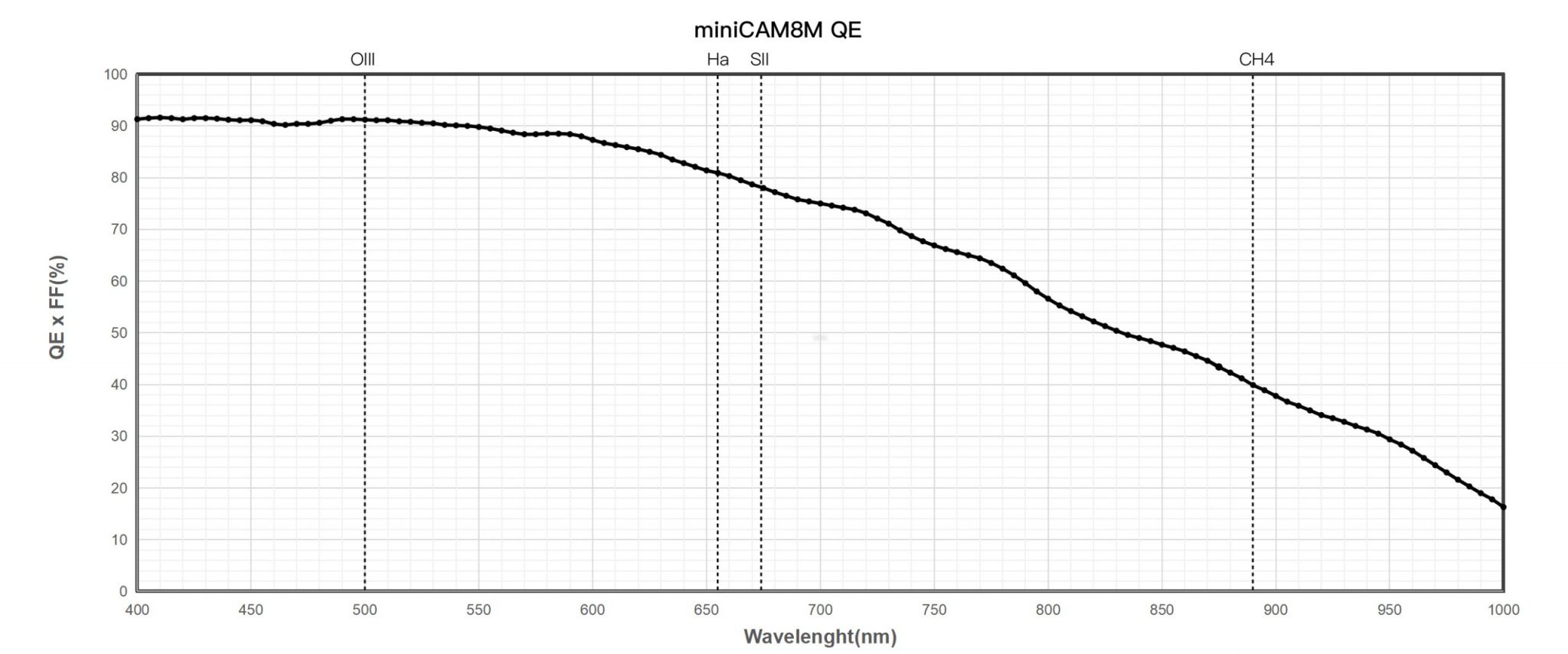
The peak quantum efficiency of the miniCAM8M reaches 91.2% in the OIII band, 80.9% in the Ha band, 78.7% in the SII band, and 40.1% in the methane band.
The peak quantum efficiency of the miniCAM8C: R channel: 82%; G channel: 87%; B channel: 75%.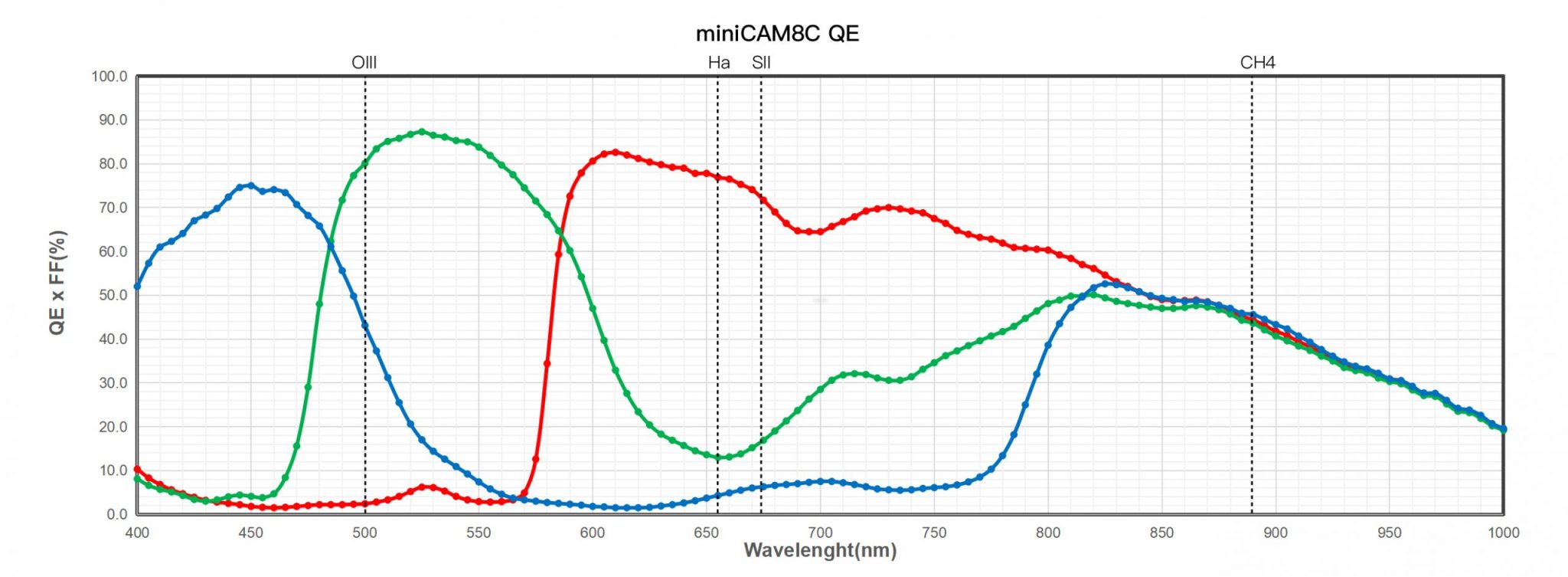
Technical Specifications
| Model | QHY miniCAM8 |
| CMOS Sensor | Sony IMX585 |
| Mono/Color | Both |
| BSI/FSI | BSI |
| Sensor Size | 1/1.2inch |
| Pixel Size | 2.9μm*2.9μm |
| Total Pixel Area | 3856*2180 |
| Effective Pixels | 8 MP |
| Full Well Capacity | 54ke- |
| Readout Noise | 0.76 – 7.8 e- |
| A/D | 12bit (output as 16-bit) |
| Full Frame Rates | Full Resolution: 41.5FPS@8bit,23.5FPS @16bit |
| ROI Frame Rates | Full Resolution 1080Lines, 82FPS@8bit, 47FPS@16bit;640Lines, 177FPS@8bit, 105FPS@16bit |
| Exposure Time Range | 11μs-900sec |
| Shutter Type | Electronic Rolling Shutter |
| Built-in Image Buffer | 512MB DDR3 |
| Computer Interface | USB3.0 |
| Telescope Interface | 1.25 inc |
| Optic Window Type | AR+AR |
| Filter Wheel | Built-in 8-Position Carousel |
| Back Focal Length | 17.5mm |
| Cooling System | Dual Stage TEC cooler:
Long exposures (> 1 second) typically -45℃ below ambient |
| Weight | 480g |
Mechanical Drawing:

In the Box

MiniCAM8 C/M Only
- Camera
- 12V 5A Power Adapter
- Power Cable
- 12V Self-Locking Power Cable
- 1.3m USB3.0 Cable
- 1.25-inch Extension Ring
- Desiccant Tube
- Lens Mounting Clamp
- Screwdriver
- Camera Packaging Bag
MiniCAM8M Combo Filters
- Luminance (19*12*1.1 mm)
- Red (19*12*1.1 mm)
- Green (19*12*1.1 mm)
- Blue (19*12*1.1 mm)
- 7nm SII (19*12*1.1 mm)
- 7nm Ha (19*12*1.1 mm)
- 7nm OIII (19*12*1.1 mm)
MiniCAM8C Combo Filters
- LPF (19*12*1.1 mm)
- HLP (19*12*1.1 mm)
- FCE (19*12*1.1 mm)
- UV/IR Cut (19*12*1.1 mm)
(LPF: Light Pollution Filter; HLP: Heavy Light Pollution Filter; FCE: Four-Channel Enhancement Filter)
Manual & Warranty
The Minicam8 has made mono imaging a treat. The built in filter wheel is perfect for the unit and works flawlessly. Everything hooks up easily with the QHY drivers installed. One quick note and it is shown in the manual: the filters are installed with the point of the arrow facing the sensor. I've done a sensor analysis in Sharpcap and set up filter offsets in NINA. The filters are not parfocal there are slight differences in the focus of each filter; in my case L is set as the autofocus filter so it is 0, R is 6, G is -8, B is 0. so run autofocus after filter changes or setup offsets. Other than that I am enjoying imaging with this little gem of a camera.
Le refroidissement était défectueux mais l'échange s'est fait sans problème. Tout fonctionne bien maintenant.