

Gift-Cards

In astrophotography, the telescope mount is often considered the most important piece of equipment in an imaging setup. Even the best telescope and camera cannot produce sharp images if the mount does not track the sky accurately.
Because the Earth rotates, celestial objects slowly move across the sky. To capture long exposures of nebulae, galaxies, or star clusters, the mount must track the motion of the stars with extreme precision. Even very small mechanical errors can result in elongated stars.

For many years, traditional equatorial mounts such as the Sky-Watcher EQ6-R Pro, HEQ5, or Celestron AVX, Losmandy G11 dominated the market. These mounts rely on worm gears and counterweights to maintain balance.
In recent years however, new mount technologies have emerged. Harmonic drive mounts and hybrid systems now allow astrophotographers to carry surprisingly large telescopes on very lightweight mounts.
Today the mount market includes several different technologies:
Traditional worm-gear equatorial mounts
Harmonic strain-wave mounts
Hybrid harmonic mounts
Direct-drive servo mounts
Each design offers advantages depending on your telescope, imaging style, and portability requirements.
This guide compares many of the most popular mounts available in 2026 from manufacturers such as ZWO, Sky-Watcher, Pegasus Astro, iOptron, Celestron and WarpAstron.
Before comparing specific models, it helps to understand the different technologies used in modern mounts.
Traditional GEM mounts use a worm gear and worm wheel to rotate the right ascension axis.
Advantages:
proven technology
excellent stability
predictable tracking behaviour
usually lower cost
Disadvantages:
heavy
require counterweights
longer setup time
Examples include:
Sky-Watcher EQ6-R
Sky-Watcher HEQ5
Celestron AVX
Sky-Watcher EQ8-R
These mounts are still extremely popular for backyard setups and observatories.
Center-balanced mounts place the telescope closer to the center of the mount’s rotational axis, allowing the weight of the telescope to sit directly above the mount rather than offset to one side like in a traditional GEM.

Advantages:
Disadvantages:
Examples include:
These mounts are designed to combine the stability of traditional equatorial mounts with improved weight efficiency, making them popular for astrophotographers who want strong payload capacity without moving to extremely heavy mounts.
Harmonic mounts use a strain-wave gear system which provides extremely high gear reduction in a compact design.

Advantages:
high payload-to-weight ratio
often usable without counterweights
very portable
Disadvantages:
usually more expensive
periodic error can be higher than precision worm systems
Examples include:

Hybrid mounts combine harmonic gears with traditional elements.
This design attempts to balance:
portability
stability
mechanical simplicity
Examples include the iOptron HEM series.
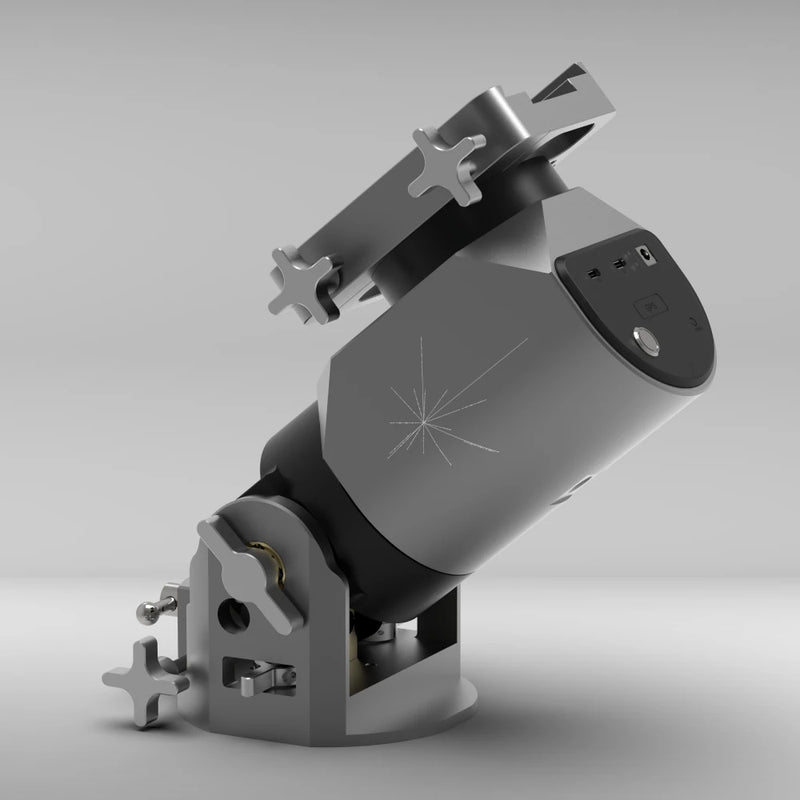
Some mounts use servo motors instead of stepper motors.
Servo systems allow smoother motion and more precise tracking.
The WarpAstron WD-20, WD-20P & WD-17 stands out in this category because it uses servo direct-drive control, which can reduce tracking error and highly improve guiding performance.
These mounts remain very common among beginners and intermediate astrophotographers.
| Mount | Approx Price CAD | Payload | Head Weight | Motor | Gear | Periodic Error | Notes |
|---|---|---|---|---|---|---|---|
| Celestron AVX | ~$1670 | 13.7 kg | 7.7 kg | DC Servo motor | Worm gear | ~±20″ | Beginner mount |
| Sky-Watcher HEQ5 | ~$2260 | 13.7 kg | 10 kg | Stepper | Worm gear, can be upgraded with belt | ~±15″ Can get better with Belt Mod |
Very popular entry mount |
| Sky-Watcher AL-EQi55 | ~$1170 | 10 kg | 3.7 kg | Servo | Worm gear | Estimated ~±15″ (not yet confirmed) | EQ + Alt-Az mode (All Latitude) |
These mounts are often used with:
small refractors , small SCT or Mak
entry astrophotography setups
beginner deep-sky imaging rigs
While they require counterweights and balancing, they remain very reliable.
These mounts are designed for portable astrophotography setups and travel imaging.
| Mount | Approx Price CAD | Payload (no CW) | Payload (with CW) | Weight | Motor | Gear Type | Periodic Error | Notes |
|---|---|---|---|---|---|---|---|---|
| ZWO AM3N | ~$2100 | 8 kg | 13 kg | 4.1 kg | Stepper | Strain wave | ~±15″ | Ultra portable |
| Pegasus NYX-88 | ~$2730 | 14 kg | ~20 kg | 5 kg | Stepper | Harmonic | ~±20″ | Premium compact mount |
| iOptron HEM27 | ~$2800 | 13.5 kg | ~20 kg | 3.7 kg | Stepper |
Hybrid harmonic Stainwave 17 & worm/belt system |
~±20-30″ Lower with the EC version |
Extremely light |
| Sky-Watcher Wave 100i | ~$2600 | 10 kg | ~15 kg | 4.3 kg | Stepper | Strain wave | ~±20″ | EQ + Alt-Az, Double Saddle Option (side by side) |
These mounts are ideal for wide-field imaging using refractors between 60 mm and 90 mm.
Note, that Harmonic mount can appear cheaper, but tripod are usually not included in the price.
This is currently the most competitive category in the astrophotography mount market.
| Mount | Approx Price CAD | Payload (no CW) | Payload (with CW) | Weight | Motor | Gear | Periodic Error | Notes |
|---|---|---|---|---|---|---|---|---|
| ZWO AM5N | ~$2800 | 15 kg | 20 kg | 5.5 kg | Stepper motor + synchronous belt | Strain wave | ~±10″ ~±20″ for the first AM5 version |
Very popular portable mount |
| Pegasus NYX-101 | ~$4150 | 20 kg | 30 kg | 6.5 kg | Stepper | Strain Wave & Belt | ~±10″ | High precision machining |
| iOptron HAE43 | ~$4500 | 20 kg | ~25 kg | 5.7 kg | Stepper | Strain wave | ~±18″ | Strong payload ratio |
| WarpAstron WD-20 | ~$4500 | 22 kg | 30 kg | ~5.4 kg | BLDC Servo Direct | Harmonic RA: 20 Strain Wave Drive / DEC: 17 Strain Wave Reducer |
~±5″ | Servo direct drive, Higly accurate and lightweight |
| Sky-Watcher Wave 150i | ~$3470 | 15 kg | 25 kg | 5.8 kg | Stepper | Strain wave | ~±20″ | Reliable, Sky-Watcher strong reputation |
Mounts in this category can support:
larger refractors
Newtonians
medium SCTs
The WD-20 stands out because of its servo motor design, which can produce smoother tracking compared to stepper motors.
The EMCAN EM31-Pro is another harmonic drive mount designed for portable astrophotography. It offers around 15–18 kg payload in a lightweight body (~6 kg), though it remains less common than mounts from ZWO or Sky-Watcher.
Note, that Harmonic mount can appear cheaper, but tripod are usually not included in the price.
These mounts are designed for large telescopes or observatory setups.
| Mount | Approx Price CAD | Payload | Weight | Motor | Gear | Periodic Error | Notes |
|---|---|---|---|---|---|---|---|
| Sky-Watcher EQ6-R | ~$3310 | 20 kg | 17.3 kg | Stepper | Worm & belt-driven transmission | ~±5-10″ | Extremely popular |
| Sky-Watcher EQ8-R | ~$8100 | 50 kg | 25 kg | Hybrid Stepper | Worm belt-driven transmission | ~±3-5″ | Observatory class, Extremely high payload |
| ZWO AM7 | ~$3500 | 20 kg / 30kg with CW | 6.75 kg | Stepper | Strain wave | ~±10″ | High capacity harmonic |
| iOptron HAE69C | ~$6400 | 31 kg | 36 kg | Stepper | Strain wave | ~±15″ | among highest payload harmonic mount |
Traditional mounts like the EQ6-R and EQ8-R remain extremely stable because their mass reduces vibration and improves tracking.
Note, that Harmonic mount can appear cheaper, but tripod are usually not included in the price.
Periodic error refers to small tracking variations caused by imperfections in gears or mechanical components.
Typical values include:
| Mount Type | Typical Periodic Error |
|---|---|
| Direct drive servo mounts | ±3″ – ±5″ |
| Precision harmonic mounts | ±10″ |
| Standard harmonic mounts | ±15″ – ±25″ |
| Worm gear mounts | ±5″ – ±15″ |
Autoguiding software can greatly reduce these errors, but mounts with lower native periodic error generally guide more easily.
Several high-end mounts are also respected in the astrophotography community.
These include:
Rainbow Astro mounts (RST-135, RST-300)
These mounts offer exceptional engineering and precision but usually come at higher price points.
For many astrophotographers, the decision ultimately comes down to two very popular mounts: the ZWO AM5N and the Sky-Watcher EQ6-R.
These two models represent two different philosophies of mount design.
The EQ6-R is a traditional equatorial mount. It is heavier, uses counterweights, and relies on a worm-gear system that has been proven for decades. Because of its weight and mechanical rigidity, it is extremely stable and performs very well with larger telescopes.
The AM5N, on the other hand, represents the new generation of harmonic drive mounts. It is dramatically lighter and easier to transport. Many astrophotographers can carry their entire setup in one trip.
In practice, most people choose between these two mounts based on portability versus traditional stability.
The EQ6-R is often preferred when:
the setup is mostly permanent
larger telescopes are used
maximum mechanical stability is desired
The AM5N is often preferred when:
portability matters
the setup must be transported frequently
quick setup and lighter equipment are priorities
Both mounts are excellent options, which explains why many astrophotographers spend time comparing them before making a decision.
Modern telescope mounts now offer several technologies, each designed for different astrophotography needs. Traditional worm-gear mounts remain extremely stable and reliable, while newer harmonic and hybrid designs provide impressive portability and payload efficiency. The best choice ultimately depends on your telescope, imaging goals, and whether portability or maximum mechanical stability is your priority.
{"one"=>"Select 2 or 3 items to compare", "other"=>"{{ count }} of 3 items selected"}
Leave a comment